
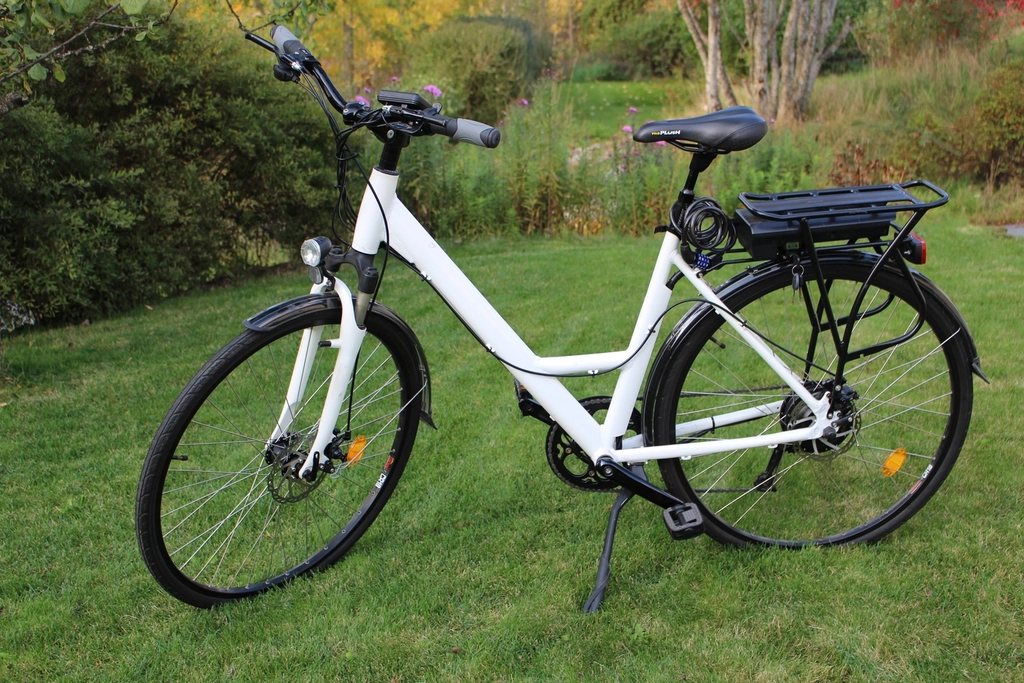
More of our club rides now include a motor or two, and the questions at the coffee stop have changed. Which class is this? How far will it really go? Can I take it on the river trail? Will it climb the hill out of the valley without me dying? E-bikes are the fastest-growing part of city cycling, and they make sense in a place with long flat stretches, strong afternoon winds and summer heat. They also come with a layer of rules and numbers that regular bikes never had. Here is our plain-language guide to the classes, the batteries, the weight and where you are allowed to ride.
Class 1, 2 and 3: what the labels mean
Most states in the US, including Washington, use a three-class system, and a sticker on the frame is supposed to say which one you have. Class 1 is pedal assist only: the motor helps while you pedal and stops helping at 20 mph. Class 2 adds a throttle, so the motor can move the bike without pedaling, and it is also limited to 20 mph. Class 3 is pedal assist up to 28 mph, with no throttle in most states, and it usually comes with a speedometer and a minimum rider age of 16. All three classes are limited to a motor of 750 watts of continuous power. Anything above those limits, whether a 1000 watt motor or a bike that reaches 35 mph, is not legally an e-bike in most states. It is a moped or a motor vehicle, with the licensing and insurance that come with that, and it is not welcome on bike paths. Know the class before you buy.
Watt-hours and real-world range
Battery size is the number that matters, and it is measured in watt-hours, written Wh. A typical city e-bike battery is 400 to 750 Wh. A small folding bike might carry 250 Wh, and a cargo bike might carry two packs totaling over 1000 Wh. To estimate range, divide watt-hours by how many watt-hours you use per mile. A light rider on a flat road in low assist uses around 10 Wh per mile. A heavier rider in high assist with a headwind, or a throttle-only rider, can burn 25 to 30 Wh per mile. So a 500 Wh battery gives anywhere from 17 to 50 miles, which is why the manufacturer’s range claim always has a wide spread. Cold weather cuts range by 20 to 30 percent, and a battery that has been through 500 or more full charges will hold noticeably less than when it was new. Our practical rule for commuting: buy a battery with twice the watt-hours you think your round trip needs, and you will still be fine in February when the battery is three years old.
Charging habits that make a battery last
A standard 500 Wh pack charges from empty in 4 to 6 hours with the supplied charger, which draws about the same power as a laptop. Fast chargers cut that in half but add heat, and heat is what ages a lithium battery. A few habits make a big difference. Charge indoors at room temperature, not in a hot garage in August or a freezing shed in January. Try to keep the battery between 20 and 80 percent for daily use and only charge to full for a long ride. If the bike will sit for a month, store the battery at around 50 percent. Use only the charger made for that battery. A well-treated pack lasts 800 to 1000 charge cycles, roughly five years of commuting, and a replacement costs 400 to 900 USD, so these habits are worth real money.
Weight, and why it matters more than you think
A regular city bike weighs 11 to 14 kg. A typical e-bike weighs 20 to 28 kg, and a cargo e-bike can pass 35 kg before you add the groceries. That weight is fine while the motor is running and terrible in every other moment. Think about the stairs to your apartment, the bus rack downtown, which often has a weight limit around 25 kg, and the moment you have to lift the rear wheel over a curb. A removable battery, 3 to 4 kg on its own, makes carrying easier and lets you charge at your desk. Heavier bikes also need stronger brakes. Hydraulic disc brakes with 180 mm rotors are the standard on a good e-bike, and they stop a 25 kg bike from 20 mph where rim brakes would struggle. Tires are wider too, often 50 to 60 mm, and run at lower pressure for grip and comfort with the extra mass.
Where you can ride each class
This is where the classes earn their keep. In general, Class 1 and Class 2 e-bikes are allowed wherever regular bikes are allowed, including bike lanes, shared-use paths and most paved trails. Class 3 is allowed in on-street bike lanes but is often banned from shared-use paths and multi-use trails, because 28 mph does not mix with walkers and dogs. Natural surface trails are a separate story. Many federal lands, state parks and local trail systems either ban all e-bikes on dirt or allow only Class 1, and the rules change from one trailhead to the next. Local rules vary across the Tri-Cities and the surrounding counties, so look for signs at the trail entrance before you bring a Class 3 bike onto a river path. When in doubt, ride at the speed of the slowest bike around you. The fastest way to lose a path for everyone is for a few riders to blast down it at motor speed.
Hills, headwinds and the honest truth about assist
Motors shine exactly where our region punishes regular bikes. A 250 watt mid-drive motor, which is the common size on a Class 1 city bike, roughly doubles a normal rider’s power. On a 6 percent grade, that turns a 6 mph grind into a 12 mph cruise. Against the 20 mph afternoon wind that funnels up the river, a rider who would normally drop to 9 mph can hold 15 with medium assist. The costs are real, though. Climbing and headwinds are exactly the conditions that drain the battery fastest, sometimes 30 Wh per mile, so a 500 Wh pack that does 40 miles on a calm flat loop may only do 18 on a windy day with a hill each way. Plan the return leg with more margin than the outbound one, and when the battery hits 20 percent, drop to the lowest assist level. A dead e-bike is a very heavy bike, and pedaling 25 kg home into a headwind is the one experience that turns every rider into a careful charger. Ridden within the rules and the numbers, an e-bike turns a stressful commute into the easiest part of the day.
Read next: Trail Head Cyclery: What a Local Bike Shop Does for Urban Riders