
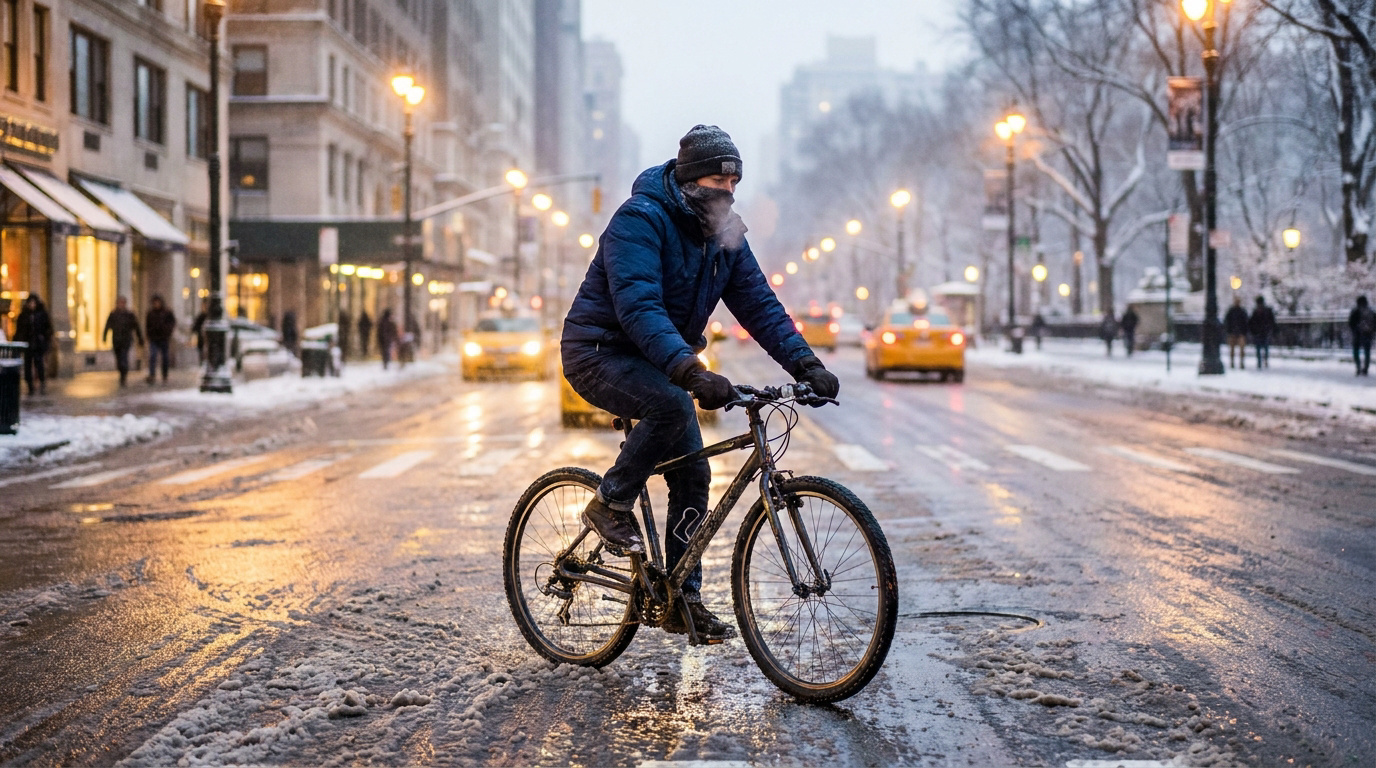
Key takeaway: Safe winter cycling relies on choosing carbide-tipped studded tires for ice or high-traction winter rubber for snow. Lowering tire pressure by 10-15 PSI expands your grip on slippery surfaces, while a strict rinse-and-lube routine prevents road salt from corroding your drivetrain. Prioritizing visibility and upright cornering ensures a secure commute despite freezing urban hazards.
According to a 2021 TCS comparative test, carbide-tipped studded tires outperform all other options for static friction and braking on pure ice. These specialized components provide a vital safety margin when overnight lows hit freezing and urban paths turn into skating rinks.
Yet, many riders struggle to balance staying warm without overheating while protecting their drivetrain from corrosive road salt. We will examine how to optimize your winter bike commuting setup using smart layering, precise tire pressure adjustments, and essential maintenance routines to keep you riding safely until spring.
- Winter Bike Commuting Tips for Tire Selection and Traction
- Smart Layering to Balance Warmth and Sweat
- Protecting the Drivetrain from Road Salt and Moisture
- Defensive Riding on Ice and Urban Infrastructure
Winter Bike Commuting Tips for Tire Selection and Traction
Carbide-tipped studded tires provide essential grip on black ice, while dropping tire pressure by 10-15 PSI improves traction in fresh snow. These mechanical adjustments remain the primary defense against winter urban cycling hazards.
Transitioning from autumn to deep winter requires a serious look at your rubber, as standard tires quickly lose their soul on frozen pavement.
Studded Tires Versus Standard Knobby Treads
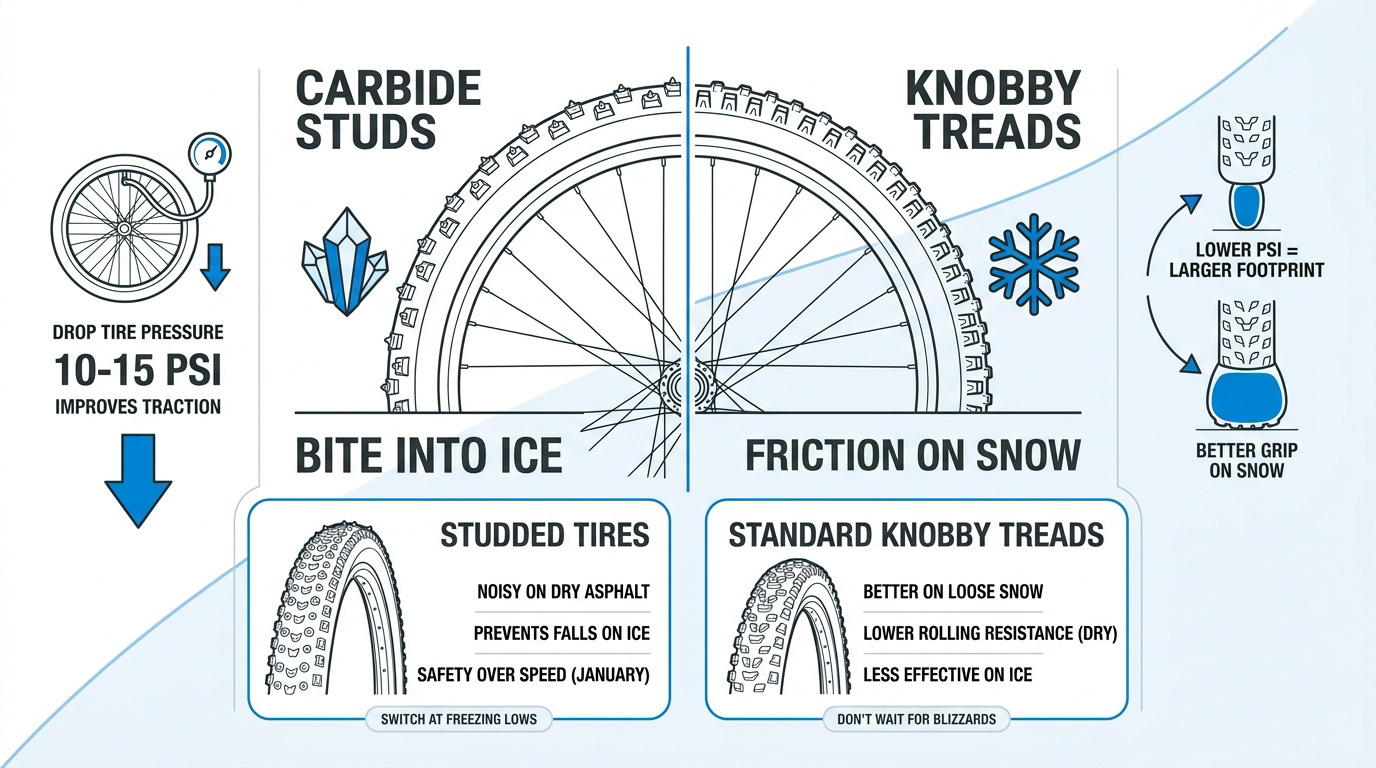
Carbide studs bite into solid ice effectively. Soft rubber winter tires offer grip on cold pavement. Knobby tires rely on surface friction, which fails on frozen sheets of black ice.
Studs create significant rolling resistance. They are noisy and slow on dry asphalt. However, they prevent sudden falls on frozen patches. Safety usually outweighs speed in January.
Install winter rubber early. Swap tires when overnight lows consistently hit freezing. Don’t wait for the first blizzard to replace your standard hybrid tires.
Pressure Adjustments for Varying Snow Conditions
Lower PSI offers major benefits. Reducing air pressure expands the tire footprint. This creates a larger contact patch for better grip on soft, unplowed snow.
Aim for 20 to 30 PSI for standard 35mm commuter tires. Adjust based on your total weight. Lower ranges work best in sub-zero temperatures for maximum flexibility.
Watch out for urban potholes. Low pressure increases the risk of pinch flats. Keep enough air to protect your rims from hidden obstacles under the slush.
Commuting by Bike in Winter: Studded Tires, Layers and Road Salt requires constant vigilance. Beyond tires, remember that road salt is highly corrosive. Always rinse your bike with clear water and lubricate moving parts to prevent rust after riding through winter slush.
Smart Layering to Balance Warmth and Sweat
Traction keeps the bike upright, but managing body temperature determines if the commute is actually sustainable day after day.
The Wicking Insulating and Shielding System
Your first layer must manage moisture. Use merino wool to pull sweat away from the skin. Add a windproof shell to block the biting chill. This dual system traps heat effectively.
Heat venting techniques save your ride. Open underarm zips during steep climbs. Preventing sweat buildup is vital. Dry skin stays warm much longer than damp skin in winter.
Synthetic blends or wool maintain loft when wet. Avoid cotton at all costs during cold commutes. It holds moisture and freezes you.
Footwear and Hand Protection for Extreme Cold
Lobster gloves split fingers for better braking control. Mittens offer more warmth but limit dexterity. Choose based on your shifter style. Safety requires a firm grip.
Sizing for circulation is a game-changer. Buy winter boots one size larger. This allows for thick socks and proper blood flow. Tight shoes lead to frozen toes quickly.
Use toe heaters for rides over thirty minutes. They provide a cheap safety net against frostbite. Small packets keep extremities functional.
Managing Eyewear Fogging and Face Coverage
Balaclavas offer full coverage under helmets. Neck gaiters are easier to pull down. Both protect the face from stinging wind and ice. Choose based on the morning temperature.
Apply specialized sprays to your lenses. Vented goggles help move air away from the eyes. This prevents dangerous whiteouts during heavy breathing. Clear vision is non-negotiable.
Ensure masks don’t block your side view. Seeing traffic is more important than total face warmth. Stay aware of your surroundings.
Protecting the Drivetrain from Road Salt and Moisture
While your body stays warm, the bike faces a chemical assault from corrosive road salts that requires a strict cleaning ritual.
Cleaning Routines to Stop Metal Corrosion
Post-ride rinse. Spend three minutes rinsing the frame daily. Use fresh water to neutralize de-icing chemicals. This simple habit saves hundreds in repairs.
High-risk zones. Focus on spoke nipples and the bottom bracket. These areas trap salt and moisture. Rust here can lead to structural failure over time.
Apartment solutions. Use a portable pump sprayer if you lack a hose. It provides enough pressure to clean effectively.
Lubrication Choices for Wet and Freezing Conditions
Wet vs dry lubes. Use heavy wet-weather oils for winter. They resist being washed away by slush. Dry lubes disappear instantly in snowy urban environments.
Application frequency. Reapply oil every two days in heavy snow. Wipe the chain frequently to remove black grit. Consistency prevents the dreaded rusted chain.
Quick cleaning. Use a rag to strip surface gunk. You don’t need a full degrease every single week.
Cold Weather Care for Electric Bike Batteries
Lithium-ion chemistry. Freezing temperatures slow down chemical reactions. This leads to a significant drop in battery range. Expect 30% less capacity in deep winter.
Indoor storage. Keep the battery inside your home. Only mount it right before you leave. Warm cells perform better and last longer.
Charging safety. Never charge a frozen battery. Let it reach room temperature first to avoid permanent cell damage.
Defensive Riding on Ice and Urban Infrastructure
Maintenance keeps the machine running, but your handling techniques determine whether you navigate the slush safely or end up on the pavement.
Braking and Turning on Black Ice or Slush
Upright cornering is your best defense. Keep the bike vertical during turns. Leaning on ice causes immediate slides. Direct your weight through the tires for maximum downward pressure.
Front brake dangers are real. Avoid the front brake on frozen meltwater. Use the rear brake gently to slow down. Locking the front wheel results in a crash.
Practice drills help. Test slides in empty snowy lots. Learn how the bike reacts safely.
Visibility Gear for Low-Light Winter Mornings
Lighting choices matter when commuting by bike in winter: studded tires, layers and road salt are only half the battle. Use high-lumen rechargeable lights as your primary source. Keep cheap flashers as backups. Winter mornings require intense brightness to be seen by drivers.
Reflective tape placement is a smart move. Apply tape to pedals and rims. Moving reflections catch the eye faster than static ones. This highlights your motion to surrounding traffic.
Helmet lights add safety. Use them to look at drivers. They ensure you are seen at intersections.
Handling Unplowed Lanes and City Obstacles
Merging strategies require confidence. Take the lane when bike paths are blocked. Drivers expect slower movement in snow. Be predictable and signal your intentions early.
Hidden hazards lurk under the surface. Fresh powder hides frozen ruts and debris. Ride slowly to react to these bumps. Mental preparation is key for these changing conditions.
Slower travel is inevitable. Accept that winter commutes take longer. Don’t rush on slippery surfaces.
Mastering winter urban cycling requires carbide-tipped studded tires for ice, strategic merino layering for warmth, and consistent salt removal to prevent corrosion. Implementing these adjustments now ensures a safe, sustainable commute. Prepare your gear today to enjoy the crisp, silent beauty of the frozen city with total confidence.
FAQ
Should I choose studded tires or standard winter bike tires for commuting?
The choice depends on your specific route conditions. Studded tires, equipped with carbide-tipped studs, are the only effective solution for riding on black ice or hard-packed snow, as they provide essential mechanical grip. However, they can be noisy and offer higher rolling resistance on dry pavement.
Standard winter tires use a softer rubber compound and aggressive tread patterns to maintain flexibility in temperatures below 7°C. While they excel in fresh snow and slush, they lack the biting power of studs on frozen meltwater. For maximum safety during a full winter season, studded options are generally superior.
How much should I lower my tire pressure when riding in the snow?
To improve traction on soft or unplowed surfaces, you should drop your tire pressure by approximately 10 to 15 PSI from your usual setting. For a standard 35mm commuter tire, aiming for a range between 20 and 30 PSI is often ideal. This increases the tire’s footprint, creating a larger contact patch for better stability.
Be careful not to go too low, as insufficient air increases the risk of pinch flats when hitting hidden potholes or curbs. Always ensure there is enough pressure to protect your rims from structural damage while navigating urban obstacles hidden under the slush.
What is the most effective way to layer clothes for cold weather cycling?
The most effective strategy is the three-layer system. Start with a merino wool base layer to wick moisture away from your skin, followed by an insulating middle layer to trap heat. Finish with a windproof and waterproof outer shell to block the biting winter chill and keep you dry.
Managing sweat is just as important as staying warm. Use venting techniques, such as opening underarm zippers during climbs, to prevent moisture buildup. Remember that dry skin stays warm much longer, so avoid cotton fabrics which trap dampness and lead to rapid cooling.
How can I protect my bike’s drivetrain from corrosive road salt?
Road salt is highly corrosive and can quickly lead to rust and structural failure. You should establish a daily routine of rinsing your bike with fresh water after every ride to neutralize de-icing chemicals. Focus specifically on high-risk zones like the chain, spoke nipples, and bottom bracket where salt tends to accumulate.
Proper lubrication is also vital. Switch to a heavy “wet” lube, as these oils resist being washed away by slush and snow better than dry lubricants. Reapply your lubricant every few days in heavy winter conditions and wipe the chain frequently to remove abrasive black grit.
How does extreme cold affect electric bike batteries?
Freezing temperatures slow down the internal chemical reactions of lithium-ion batteries, which can result in a 30% drop in range during deep winter. To maintain performance, always store and charge your battery indoors at room temperature, only mounting it to the bike immediately before you depart.
Safety is critical when charging in winter. Never plug in a frozen battery; allow it to reach room temperature gradually before charging to avoid permanent cell damage. Taking these precautions ensures your e-bike remains reliable even when the thermometer dips well below zero.
What are the best techniques for braking and turning on icy roads?
When navigating ice or slush, keep your bike as vertical as possible during turns. Leaning into a corner on a slippery surface can cause an immediate slide. You should also avoid using your front brake on frozen patches, as locking the front wheel almost always results in a crash; instead, use the rear brake gently to control your speed.
It is helpful to practice these handling techniques in a safe, empty snowy lot to understand how your bike reacts. Always maintain a slower pace and increase your following distance, as stopping times are significantly longer on winter roads.