
The phrase “mountain bike” sounds simple, but it covers a wide family of machines, from light racing bikes to heavy downhill rigs. Knowing what the term means, and how the categories differ, keeps you from buying a bike that fights you on every ride, whether your plans are trails, pavement or a mix of both.
- A mountain bike is a bicycle built for rough, unpaved terrain, with sturdier parts and suspension.
- The main types are separated mostly by suspension travel and geometry.
- Many riders use mountain bikes on pavement, so the best choice depends on where you actually ride.
What does “mountain bike” actually mean?
A mountain bike, often shortened to MTB, is a bicycle designed for off-road cycling. It shares a lot with other bikes, but it adds features meant to survive and perform on rough ground. In practice, that means a suspension fork, large knobby tires, tougher wheels, stronger brakes, wide straight handlebars and gearing with a broad range.
Those same features come with a cost. Mountain bikes tend to be heavier, more complex and less efficient on smooth surfaces than road-oriented bikes. That trade-off is worth keeping in mind later if your riding is mostly on streets.
You may also see the terms “all terrain bicycle”, “all terrain bike” or the acronym ATB. These are used as synonyms for mountain bike, although some writers consider them dated.
Where did the mountain bike come from?
The first mountain bikes were modified heavy cruiser bicycles that riders used to coast down mountain trails. The sport took off in the 1970s in Northern California, where riders took older single-speed balloon-tire bikes down rugged hillsides. Different regions had their own nicknames for these machines: “ballooners” in California, “klunkers” in Colorado and “dirt bombers” in Oregon.
Joe Breeze, a frame builder, built on that idea and developed what is considered the first mountain bike. The Lawwill Pro Cruiser, from 1979, was the first production mountain bike, and the Specialized Stumpjumper, first produced in 1981, was the first mass-production model.
By the 1990s and 2000s, mountain biking had moved from a little-known pastime to a mainstream activity with an international racing circuit and a world championship.
What are the main types of mountain bikes?
Mountain bikes are grouped by design, suspension and intended use. One guide lists seven main types: cross-country, trail, enduro, downhill, freeride, fat bikes and dirt jump bikes. The biggest differences between them are suspension travel and geometry.
- Cross-country (XC): the lightest type, with steep, efficient geometry. It suits riders who care most about fitness, climbing and speed.
- Trail: balanced geometry and mid-range travel, sitting between XC and enduro. It is the most versatile type and the usual starting point.
- Enduro: long travel and slack, aggressive geometry. It is heavier and burlier than a trail bike, built for technical descents while still being pedalable uphill.
- Freeride: a blend of downhill and all-mountain, built for jumps, drops and stunts with a reinforced build.
- Fat bikes: oversized tires that grip and float over snow and sand.
- Dirt jump: usually singlespeed hardtails with short travel, made for pump tracks and jump parks.
Other labels you will meet include all-mountain, slalom and various track disciplines. Each places different demands on the bike, which is why the designs differ.
Rigid, hardtail or full suspension: which setup do you need?
Suspension is the clearest way to sort mountain bikes, and it also drives price and upkeep. There are four broad configurations:
- Rigid: no front or rear suspension. It suits smooth terrain and riders who want a direct feel. Most fat bikes are rigid.
- Hardtail: a suspension fork up front and a rigid frame. It is lighter, cheaper, more efficient on climbs and lower in maintenance, which makes it a sensible starting point for most beginners.
- Soft tail: pivots in the frame but no rear shock, so frame flex absorbs some vibration. These are usually cross-country bikes.
- Full suspension: front and rear suspension. It offers the most comfort and traction on rough ground and better control on technical trails, but it is heavier and pricier.
If your riding is mostly paved paths with an occasional dirt shortcut, the simpler setups usually make more sense than a long-travel machine you will rarely use to its potential.
Which other features separate one mountain bike from another?
Beyond type and suspension, a few components shape how a bike feels and what it costs.
Frame material
Aluminum is the default for entry-level and mid-range bikes and gives solid performance for most riders and budgets. Carbon is the lightest and stiffest option and damps trail vibration, but it costs more. Steel absorbs trail chatter well but weighs more than aluminum or carbon. Titanium is light, tough and corrosion-resistant, though its labor-intensive manufacturing makes it the most expensive.
Wheel size and brakes
Large wheels roll over obstacles easily and carry momentum well, and they are the dominant choice on modern mountain bikes. Smaller wheels suit shorter riders and tight, playful trails. Some bikes mix a large front wheel with a smaller rear one. Disc brakes are standard on virtually all modern mountain bikes and give consistent stopping power in mud, rain and dust. Hydraulic discs deliver the most power for the least effort.
Gearing
Many modern bikes use a single chainring at the front with a wide-range cassette at the rear. This lowers weight, increases ground clearance and simplifies shifting, though two or three chainrings are still common on entry-level bikes.
Is a mountain bike a good choice for city riding?
Many people do use mountain bikes mainly on paved surfaces. Some prefer the upright position, the plush ride and the stability these bikes often provide. The heavy-duty construction, stronger rims and wider tires have also made this style popular with urban riders and couriers who deal with potholes and curbs.
For a city rider, the practical question is how much of the bike you will use. Disc brakes and tough wheels are useful on any street. Long suspension travel adds weight and cost, and the knobby tires that help on dirt can feel sluggish on pavement.
- If you ride rough pavement, curbs and the occasional gravel path, a hardtail is usually enough.
- If you split your time between commuting and trails, a trail-type bike is a reasonable compromise.
- If you mostly ride smooth streets, consider whether a lighter, simpler bike would serve you better.
Test ride a few options and pay attention to weight, position and how the bike feels at city speeds, not only how it looks.
Frequently asked questions
What is the difference between a mountain bike and a regular bike?
A mountain bike is built for off-road riding, so it has a suspension fork, knobby tires, durable wheels, strong brakes and wide handlebars. These features add durability on rough ground but usually make the bike heavier and less efficient on smooth surfaces.
What does MTB stand for?
MTB stands for mountain bike. You may also see the older terms “all terrain bike” and ATB used for the same kind of bicycle.
Can you commute on a mountain bike?
Yes, many people ride mountain bikes mainly on paved surfaces. Their sturdy construction handles potholes and curbs well, though they are heavier and less efficient on smooth pavement than road-oriented bikes.
Related reading
- Locks and Theft: How to Keep Your Bike in a City
- Lights, Reflectors and Being Seen: What the Numbers Mean
Sources
- 7 Types of Mountain Bikes: Which One Is Right for You? (thebikr.com, accessed 2026-11-24)
- Mountain bike — Wikipédia (en.wikipedia.org, accessed 2026-11-24)
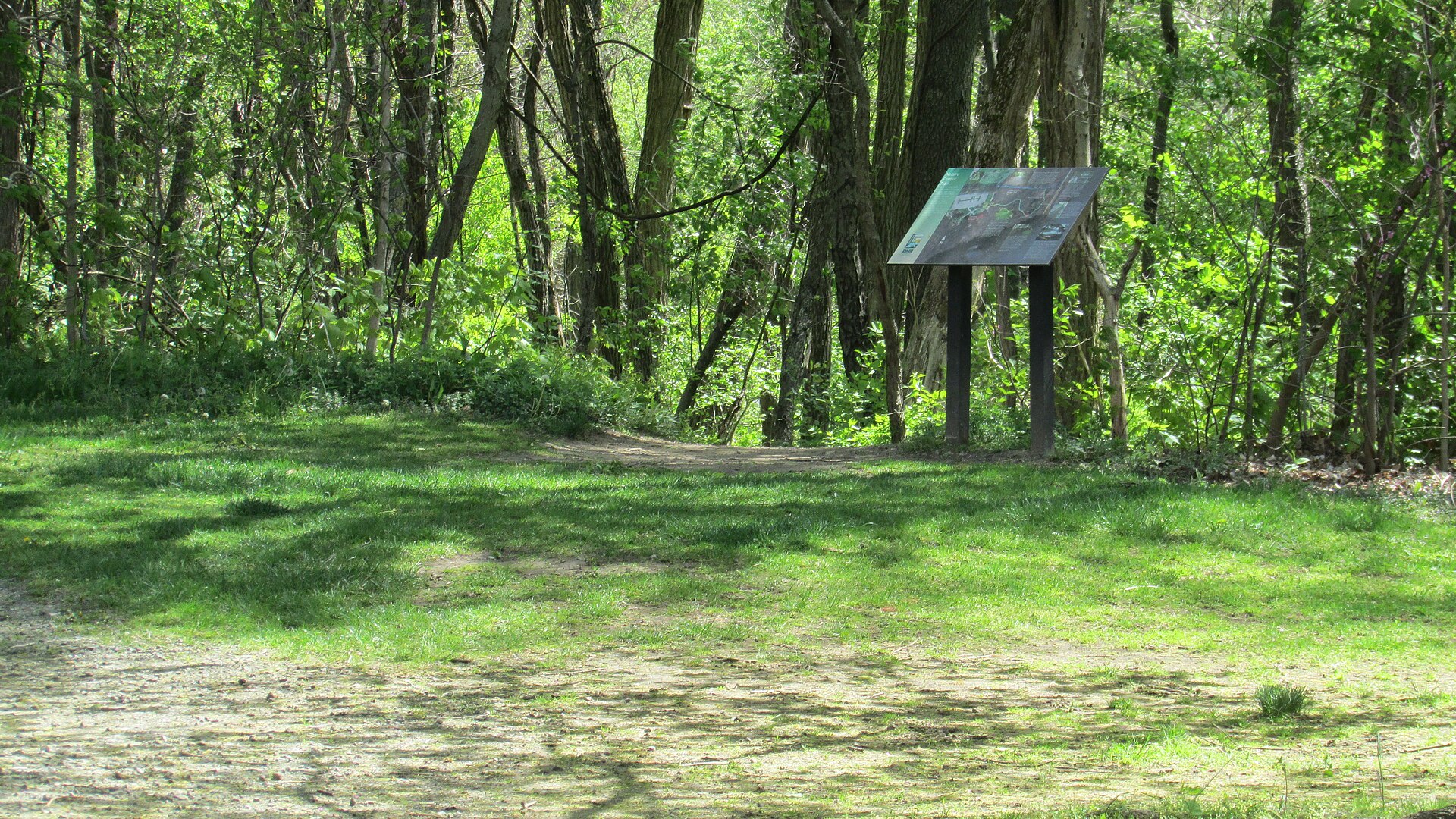
Photo: Mtn Bike Trailhead 3851, by Chris Light, CC BY-SA 4.0 (Wikimedia Commons)
