
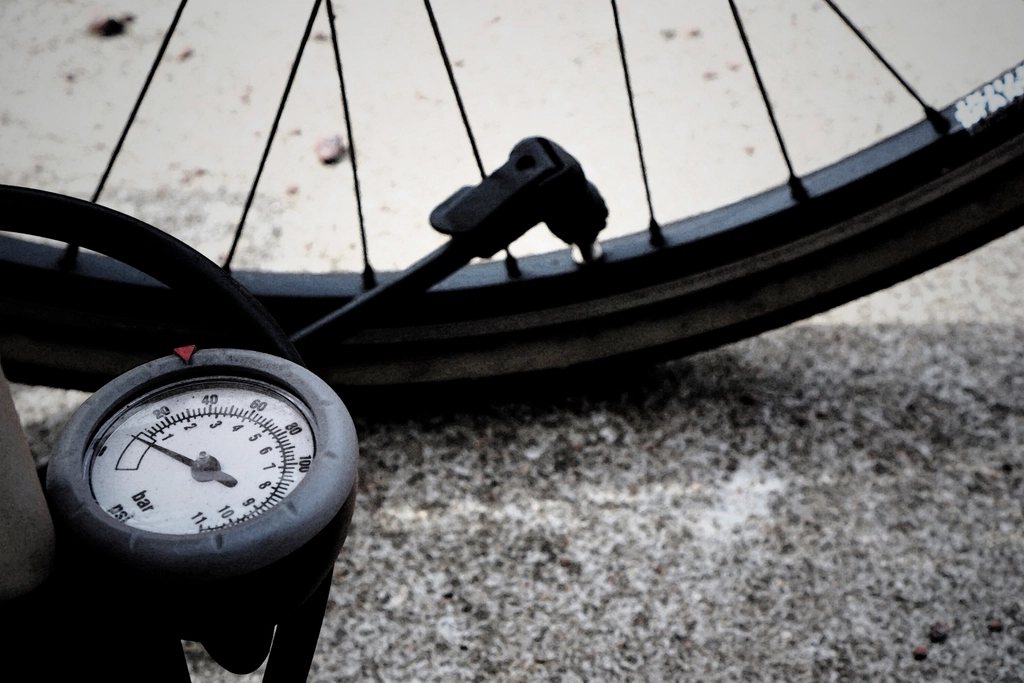
Every rider in the dry side of Washington eventually meets the same small, spiky villain. You lean the bike against a wall, come back an hour later, and the rear tire is a pancake. Nobody ran over glass. A goathead did it, quietly, somewhere between the bike path and the parking lot. The good news is that a flat is the most fixable problem a bike can have. With a small kit and a little practice, we can go from hiss to rolling again in about ten minutes, and that number drops with every repeat. This is our club-tested walk-through, from finding the culprit to deciding whether sealant is worth it for your riding.
Meet the goathead
Puncture vine grows flat along the ground in gravel shoulders, vacant lots and the edges of bike paths across the Tri-Cities and most of the arid West. Its seed pods dry into little woody stars with two hard spikes, each around 5 mm long, more than enough to pass through a standard tire and into the tube. The seeds fall in late summer and stay sharp all winter, so a single ride along an unswept shoulder in September can pick up five or six of them. They often do not deflate the tire on the spot. They sit in the rubber and work their way in as you ride, which is why the flat shows up when the bike is parked. Finding several thorns in one casing is normal here, and it is the reason our kit is a bit bigger than a kit from a wetter climate.
The kit that lives on the bike
We keep a small bag under the saddle so the kit is never left at home. It does not need to be fancy, but it does need to be complete. Here is what we carry on every bike in the club:
- One spare tube in the correct size and valve type, plus a second on longer rides.
- Two or three plastic tire levers, since metal levers can dent the rim.
- A glueless patch kit or a small tube of vulcanizing glue with patches.
- A mini pump, or a CO2 inflator with two 16 g cartridges.
- A small piece of cloth or a folded dollar bill for booting a cut tire.
- Latex gloves or a wet wipe, because chains are messy.
Check the valve type before you buy tubes. Presta valves are narrow with a small knurled nut on top; Schrader valves look like a car valve. A pump head that fits one may not fit the other without an adapter.
Getting the tire off and finding the culprit
Shift into the smallest rear cog, open the brake if you have rim brakes, and release the wheel. Let the remaining air out. Push the tire bead toward the center of the rim all the way around, which loosens it more than people expect. Hook one lever under the bead opposite the valve, pry it over the rim, and hook the lever to a spoke. Slide the second lever a hand width away and work it around until one side of the tire is off. Pull the tube out but leave the tire on the rim.
Now comes the step most riders skip, and it decides whether you fix this flat once or three times. Pump a little air into the old tube and listen or feel for the leak, noting where the hole is in relation to the valve. Then go to the matching spot on the tire and run your fingertips slowly along the inside of the casing. Goatheads usually break off flush with the tread and leave only a tiny hard nub inside. Pull each one out with fingernails or the tip of a lever. A hole on the rim side of the tube points to a spoke or a shifted rim strip, not a thorn. Finish the inspection before you touch the new tube.
Patch or new tube?
Out on the road we put in a fresh tube. It is faster and more reliable, and the patched tube can wait for a quiet evening at home. A good patch, applied with glue on a roughened, clean surface and left a few minutes to dry, is a permanent repair. Glueless patches are fine for getting home but tend to let go after a few weeks of heat. We patch tubes three or four times before retiring them, and we throw away any tube with a hole at the valve stem.
When installing, put a little air in the new tube so it holds a round shape, seat the valve first, then tuck the tube into the tire all the way around. Work the bead back on with your thumbs, finishing opposite the valve, and use a lever only for the last stubborn section. Before full inflation, push the valve up into the tire and squeeze the tire all the way around to make sure no tube is pinched under the bead. A pinched tube blows out with a bang that will make everyone on the path jump.
CO2 or pump?
A 16 g CO2 cartridge fills a 700 by 32 mm tire to about 80 psi in a few seconds, and a 25 mm road tire close to 100 psi. It is wonderful when the weather is cold and hands are stiff. The catch is that once it is used, it is gone, and a second flat means walking. CO2 also leaks through rubber faster than air, so the tire will be soft by the next morning and needs topping up with a floor pump. A mini pump is slower, two or three minutes of honest work to reach 60 to 70 psi, but it never runs out. Our answer is both: a pump on the frame for the everyday flat and one cartridge in the bag for the day the light is fading.
Sealant and going tubeless
If you get flats more than once a month, the real fix is to stop the thorn from mattering. The simplest step is a tube pre-filled with sealant, or 60 ml of sealant added through a removable valve core. When a goathead pokes through, the liquid rushes to the hole and seals it while you keep pedaling. A tubeless setup removes the tube altogether. It needs a compatible rim and tire, rim tape, tubeless valves and 60 to 90 ml of sealant per tire. Tubeless tires run at lower pressures with no pinch flats, and most thorn holes seal before you notice them. Sealant dries out in our summers, so plan on topping it up every three months. Whichever route you take, still carry a tube. Sealant fixes small holes, not a slashed sidewall, and the ten-minute routine is the one skill every city rider should be able to do in the dark.