
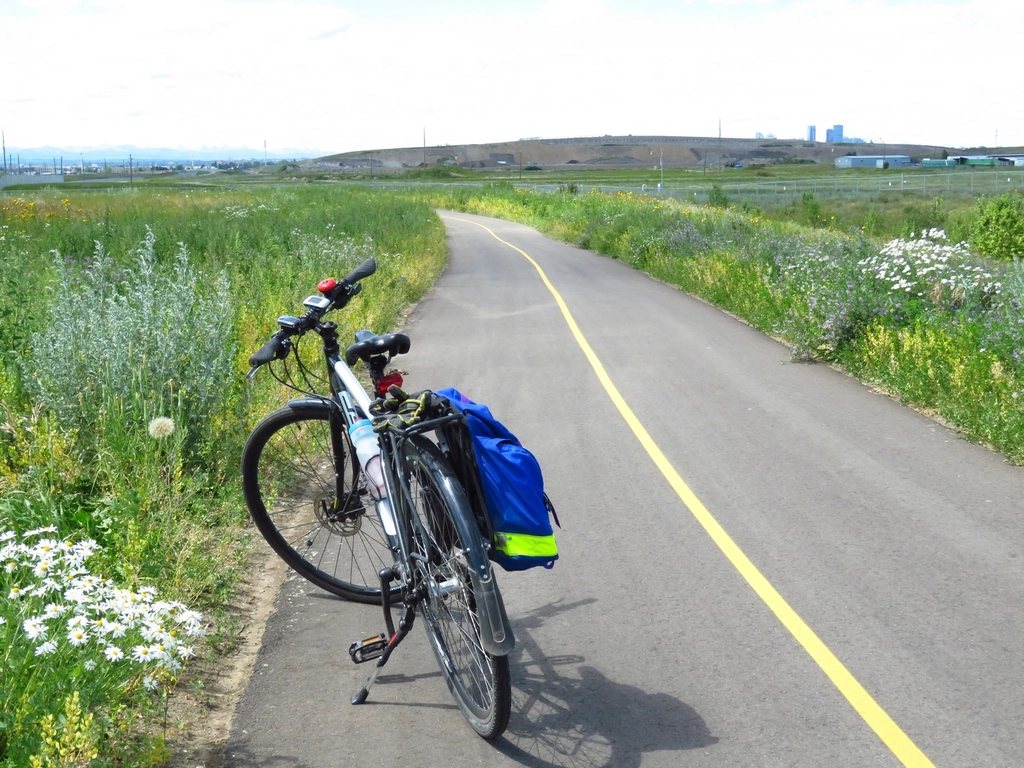
Every spring we hear the same thing from neighbors: they own a bike, they would like to ride more, and they have no idea where to begin in a place built around cars. So we wrote down the plan we give them. It takes four weeks, it starts small, and it ends with the full 23-mile Sacagawea Heritage Trail loop along the Columbia. Nothing in it requires a fancy bike or any special fitness, only a little consistency and some respect for our heat and wind.
Before You Start: A Short Gear Check
Pull the bike out and do three things. Pump the tires to the pressure printed on the sidewall; most city tires in the 32 to 40 mm range run best around 50 to 65 psi and lose air every week. Spin each wheel and squeeze the brakes to be sure they grab. Then check the helmet: any helmet sold in the United States meets the CPSC standard, so a basic 40 to 60 dollar model is fine, but replace one that is more than five years old or has ever hit the ground. Add a rear light of 20 to 50 lumens and a front light of 100 to 200 lumens, even for daytime rides, since a flashing rear light is the cheapest visibility you can buy. A bottle cage, a small pump and a spare tube complete the list, all for well under 100 dollars. A lock matters from week two on, when you start stopping places; a hardened U-lock in the 40 to 80 dollar range beats any cable.
Week 1: Short Loops in Columbia Park
Columbia Park in Kennewick is our classroom. It is flat, it has miles of paved path, restrooms, shade and plenty of free parking, and you can turn around at any point. Drive or ride to one of the lots off Columbia Park Trail, put the bike on the path, and ride 20 to 30 minutes at a conversational pace, three times this week. That is roughly 4 to 6 miles per outing. The goal is not distance; it is remembering how the gears work, how to look over your shoulder without swerving, and how to signal a turn. Practice stopping at the path crossings, and ride at different times of day so you feel the difference between a 7 a.m. and a 5 p.m. temperature. If it is above 95 F, which it will be on many afternoons from late June to early September, keep to the morning.
Week 2: The Riverfront
Now stretch out along the river. From Columbia Park, follow the Sacagawea Heritage Trail west toward Richland, past Bateman Island, where the Yakima River enters the Columbia, and on to the Richland riverfront with its parks, benches and water fountains. This section is the prettiest part of the loop and almost entirely car-free. Aim for two rides of 45 to 60 minutes and one of about 90 minutes, which at 10 to 12 miles per hour puts you around 8 to 10 miles on the longest day. Ride out into the wind, which usually blows from the southwest in the afternoon, and you will have it at your back on the way home; do it the other way round and you will learn why we keep saying wind before hills. Trailhead parking on this stretch is easy: the lots at Columbia Park, the Bateman Island causeway and the Richland riverfront parks all take cars without charge. This is also the week to try a Ben Franklin Transit bus. Every bus has a front rack, loading takes seconds, and riding one way then busing back is a completely respectable way to add distance without adding fatigue.
Week 3: Your First Bridge Crossing
A bridge is the psychological hurdle in the Tri-Cities, so we give it a whole week. The Cable Bridge between Kennewick and Pasco has a separated walkway, and its approach ramps are the closest thing to hills on the entire loop, which is to say a couple of minutes of easy climbing. Start at the east end of Columbia Park, ride downstream along the Kennewick bank, cross the Cable Bridge to Pasco, ride a mile or two on the Pasco side, and come back. Expect crosswinds in the middle of the span; keep both hands on the bars, shift down before the ramp and hold your line. Later in the week, try the Blue Bridge, whose walkway lands almost at the park gate, so the crossing is a shorter and quieter first taste if the Cable Bridge felt like a lot. Each bridge ride is about an hour. By now you should have a routine for water, meaning at least one full bottle per hour and a refill at the park fountains, and for sun, meaning a light long-sleeve top and a cap brim under the helmet.
Week 4: The Full Loop
Put it together. The full Sacagawea Heritage Trail loop is about 23 miles, and at a relaxed pace with stops it takes most new riders two and a half to three hours. Start early, ideally before 8 a.m. in summer. From Columbia Park, ride west past Bateman Island to the Richland riverfront, cross the interstate bridge to Pasco, follow the Pasco bank downstream past the Blue Bridge to the Cable Bridge, cross back to Kennewick and ride the last miles upstream to your car. The surface is paved the whole way, with a few short stretches on quiet streets on the Pasco side. Carry two bottles and something salty; refill at the Richland riverfront and again at Columbia Park. Do it on a weekend morning when the wind is lightest, and squeeze in one short mid-week ride beforehand so the loop is not your only outing that week.
What Happens After Week Four
A month in, most people have found their real answer: not whether they can ride here, but which trips make sense. The loop shows you where the trail touches shopping, work and schools, and the bus rack gives you a way home on the days the afternoon reaches 100 F. From here we suggest one rule, which is to replace a single car trip a week with the bike and let it grow on its own. The first month builds the habit; the summer heat and the winter dark are just scheduling problems once the habit is there. If you want company, the loop on a Saturday morning is where you will find the rest of us.