
A bike stops being a toy and becomes transportation the moment it carries something for you. A week of groceries, a laptop, a bag of soil from the garden center, a kid to daycare. We have hauled all of these across the Tri-Cities and learned, sometimes the hard way, what works. The options run from a 30 USD basket to a 5000 USD electric cargo bike, and each step up makes sense for a specific kind of load. This guide walks through racks, panniers, baskets, trailers and cargo bikes with the volumes, weight limits and prices we actually see.
Racks: the foundation for everything
A rear rack is the most useful upgrade a city bike can get. A standard aluminum rack bolts to eyelets near the rear dropouts and to the seat stays, weighs 500 to 700 g, and is rated for 25 kg. Heavier touring racks go to 35 or 40 kg and cost 60 to 120 USD versus 30 to 60 USD for a basic one. If your frame has no eyelets, seatpost-mounted racks exist but are limited to about 10 kg and sway with a load, so look at clamp-on frame adapters instead. Front racks come in two flavors. A low-rider rack holds panniers beside the front wheel and keeps the weight low. A front platform rack sits above the wheel, carries a crate or a bag you can see, and is rated for 8 to 15 kg. Steering gets slower and heavier as front weight goes up, so start small. Whatever rack you install, torque the bolts and add thread locker, because a rack that comes loose folds into the spokes.
Panniers: think in litres
Panniers are bags that hang on the sides of the rack, and their size is given in litres, per bag or per pair. A single 10 to 15 litre pannier holds a laptop, lunch and a light jacket, the commuter sweet spot. A pair of 20 to 25 litre bags, 40 to 50 litres total, swallows a grocery run for two people, about six paper bags worth. Look for a stiff back panel and hooks that lock onto the rack rail, because bags that bounce off on a bump are a real thing. Waterproof roll-top bags cost 80 to 200 USD each and last a decade; fabric bags with rain covers are 40 to 80 USD. One pannier is fine for loads under 5 kg, but heavier loads should be split for balance, with the heavy items at the bottom. Mount bags as far back as the rack allows so your heels do not kick them.
Baskets, crates and the grocery run
For errands where you are on and off the bike every ten minutes, nothing beats a basket. A front wire basket holds 5 to 8 litres and 5 kg, enough for a bag from the bakery and a lock. A rear basket, or a milk crate zip-tied to the rack, holds 20 to 30 litres and takes a grocery bag standing upright. The trick with groceries is shape, not volume: cans and heavy jars go low in the panniers, bread, eggs and produce go in the basket where they will not be crushed, and a 10 USD cargo net goes over everything. On a windy afternoon an empty basket is a sail; a folding rear basket, 40 to 70 USD, fixes that.
Carrying kids and other precious cargo
The rules get strict when the cargo is a child. A rear child seat carries a kid from about 12 months, when they can hold their head up in a helmet, to around 22 kg, roughly age five. The seat weighs 3 to 5 kg, costs 100 to 250 USD, and needs a rack rated for at least 27 kg or a frame mount. A front-mounted seat between the rider and the bars works for smaller kids up to 15 kg and lets you talk to them, but it changes your steering and blocks your knees on some frames. Beyond one child, or beyond age five, you are into trailer or cargo bike territory. Whatever you use, keep both hands on the bike until the buckle is closed, and add a two-legged center stand, 40 to 80 USD, the single most important accessory for any bike that carries a child.
Trailer or cargo bike
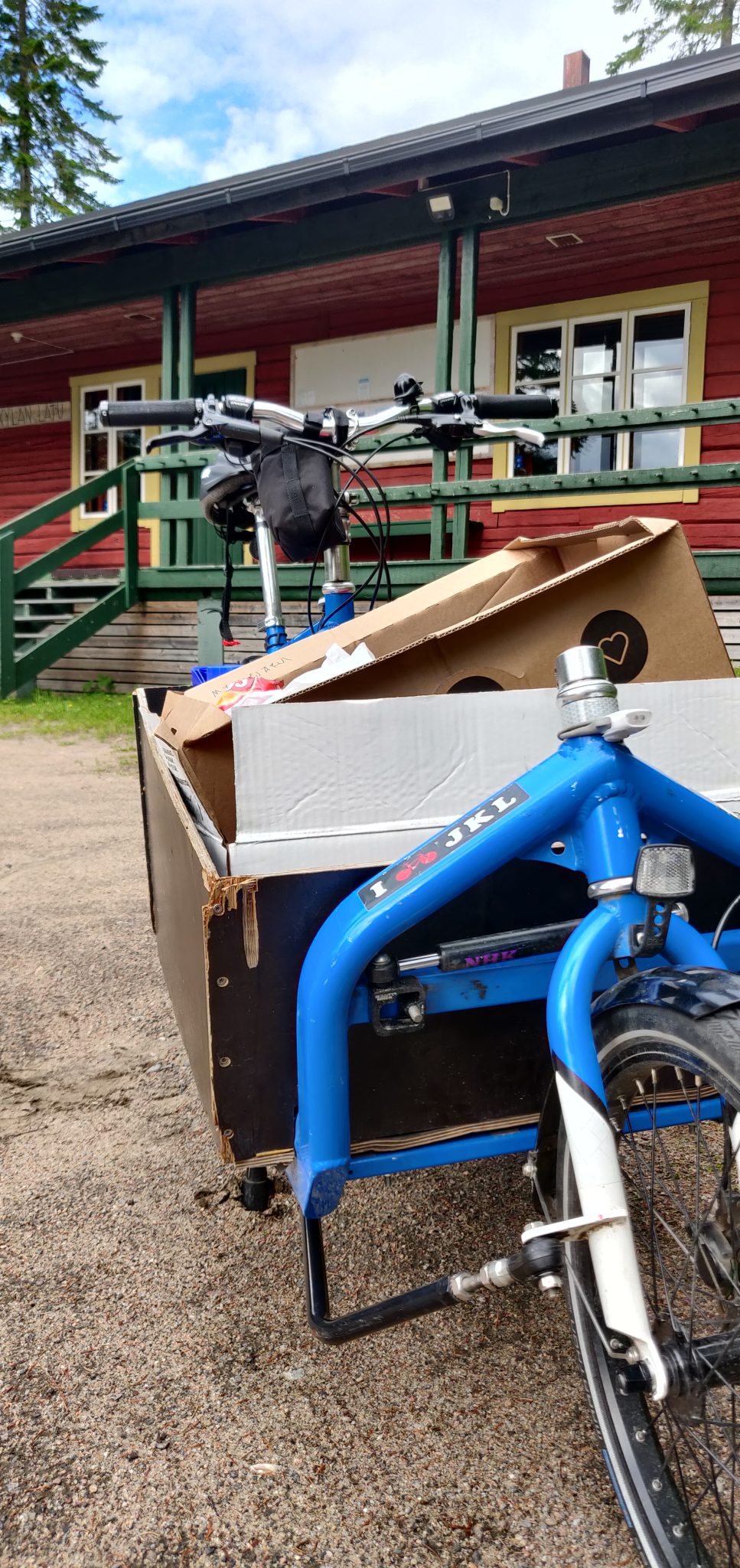
A trailer hooks to the rear axle or the seatpost and lets any bike carry 30 to 45 kg. A two-wheel child trailer costs 200 to 700 USD, holds one or two kids plus bags, is stable when stopped, and unhooks so the bike is normal again for the commute. A flatbed cargo trailer for hardware runs costs 150 to 400 USD. The downsides are length and width: a trailer adds about a meter behind you, is wider than the bike, and is invisible to drivers behind a parked car, so a tall flag is required. A cargo bike carries the load on the bike itself. Long-tail cargo bikes extend the rear rack to seat two kids or hold 50 to 70 litres of panniers per side, with total capacity of 150 to 200 kg including the rider. Box bikes put a box between the rider and the front wheel for kids, dogs and big loads, with a longer wheelbase and a learning curve for steering. Non-electric cargo bikes start around 1500 to 2500 USD; electric ones, which is what most families end up with once they meet the hill home, run 2500 to 6000 USD. We compare the options this way:
- Trailer: cheapest, works with your existing bike, removable, but long and wide and hard to park.
- Long-tail cargo bike: rides almost like a normal bike, fits a bike rack, carries two kids, good compromise.
- Box bike: the most capacity and the kids up front where you can see them, but heavy and needs its own parking spot.
Balance, weight limits and riding loaded
Every bike has a total weight limit, rider included, usually 120 to 136 kg for a standard city bike and 150 to 200 kg for a cargo model. Add up yourself, the bike and the load before the big trip to the garden center. A loaded bike takes longer to stop, wants to go straight in corners, and wobbles at low speed if the weight is high or all on one side. Keep heavy things low and centered, pack the rear panniers within a kilogram of each other, and put the bulky light stuff on top. Ride the first loaded trip on a quiet street to learn the new feel, add 5 to 10 psi to the rear tire before a heavy run, and check the rack bolts after the first rough ride. Once you have brought a week of groceries home on two wheels, the car starts to feel like a lot of trouble for a gallon of milk.